Occupational safety: An important factor in the work process
The term “Health and Safety” should be understood to be far-reaching, especially in production machining. This is because modern health and safety is preventative and does not wait for damage or events to occur before modifications or improvements are made. People are not just protected from the work itself, but rather against all dangers that arise as a result of the task.
Man schützt den Menschen nicht vor der Arbeit, sondern vor allen Gefahren, die von der Tätigkeit ausgehen.
Occupational Safety: Combination of Various Parameters
This is why the term “Health and Safety” should now be understood to include necessary aspects of Health, Safety and the Environment, or HSE, and that is how it should be applied in practice. The responsibility for the protection of employees lies exclusively with the “user”, i.e. the company. This is why responsible lubricant manufacturers should take account of these factors when developing coolants. In addition, a machine tool should be equipped in such a way that the efforts of manufacturers and users of coolants are rendered completely superfluous at a later stage, without considering the substantial economic interests. HSE starts with the intention to purchase a machine and the selection of the coolant.
Workplace safety is a preventative measure
After all, there is a factor that many companies do not take into consideration: there is a large potential for error even in the planning stages of machinery purchasing or determining the lubricant to be used. A wrong decision may, under certain circumstances, lead to a total failure of the working procedure at a later date, if for example a claim arises due to an accident or illness, because corrective measures cannot be implemented or could only be implemented with a high financial outlay.
Occupational safety with the TOP model
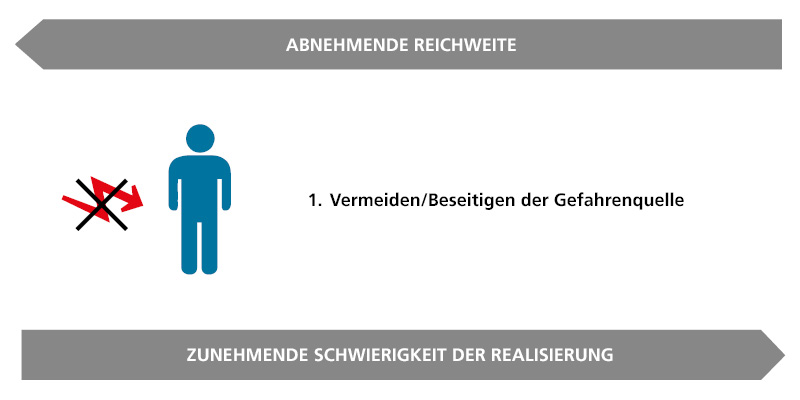
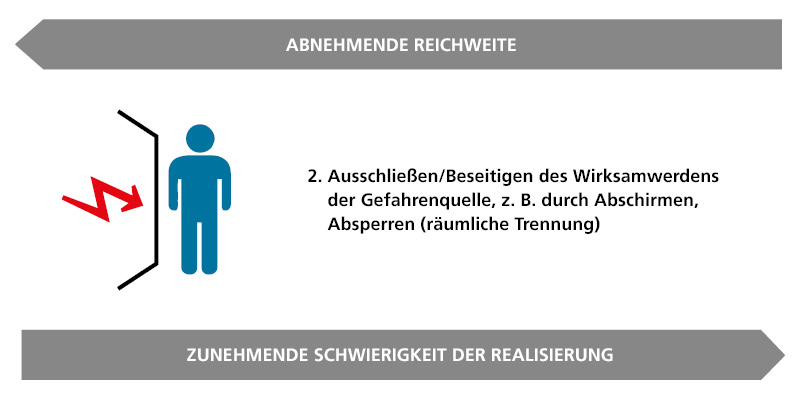
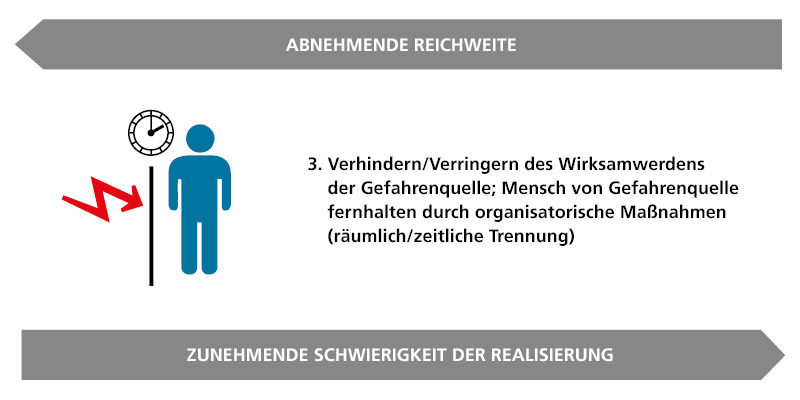
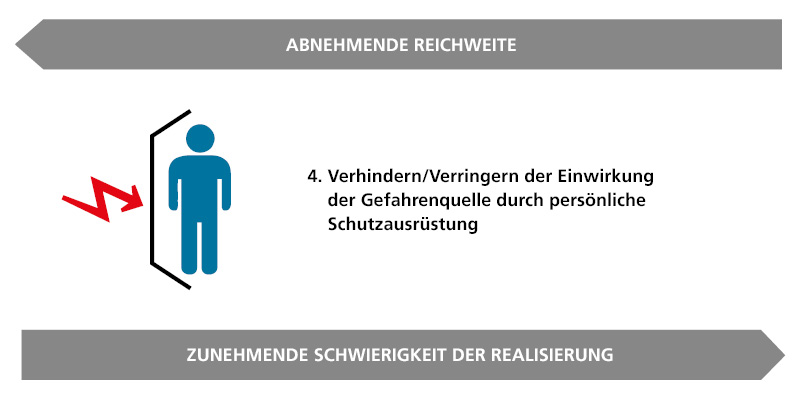
Companies can effectively protect their employees by optimising their production process in three steps using the well-known T-O-P model:
- Technical measures: Anything that can be altered on the machine itself to ensure work safety. For example, fitting safety guards or emergency stops, or even choosing a high-quality lubricant.
- Organisational measures: Everything that concerns the work processes of employees. This includes, for example, a „four-eyes principle“ at the machine.
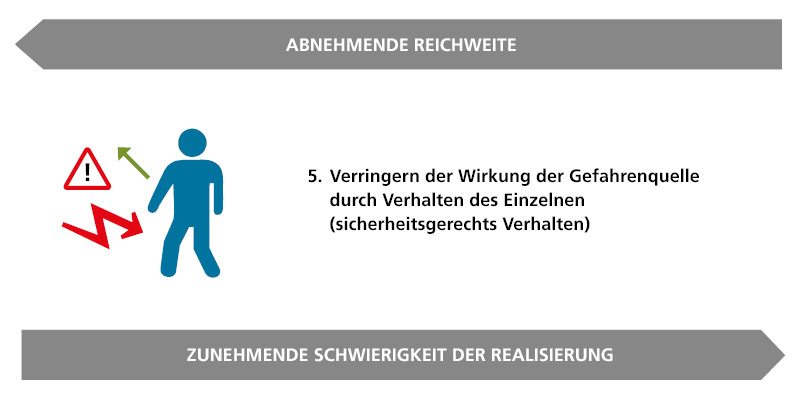
- Personal measures: Everything that concerns the training and preparation of employees. A classic example is safety training.
To begin with: identify hazards
Lubricants and coolants are becoming increasingly compatible with contact with organic materials such as human skin. But here too, the rule applies: safety first!
First of all, it is important to recognise the dangers when using lubricants. This becomes very clear when you compare the following figures: in the machining sector, lubricants are the biggest triggers of skin diseases suspected to have been caused by occupational illnesses at 33%, followed by metals at 17% and technical oils and greases at 16% (BGI 658 “Skin Protection in metal processing companies”, 2008 edition). Allergic contact eczemas can, in their chronic form, last a lifetime. Although studies show that in 70% of cases, healing is possible if you consistently avoid contact with the allergen itself, the first objective is purely and simply the basic prevention of contact with any allergens. No contact means that no allergic reaction can be triggered.
The dangers associated with coolants
Rhenus Lub continues to conduct research into skin-friendly cooling lubricants that improve health and safety at work. Nevertheless, these are materials that must be blended with various ingredients and additives in order to fulfil their important roles in industry, even though the concentration is steadily decreasing:
- Basic toxicity
- Carcinogenic ingredients such as N-nitrosamines
- Ingredients toxic to reproduction (reprotoxic), e.g. boric acid
- Multi-acting ingredients (carcinogenic and allergenic substances), e.g. formaldehyde in biocides
- Micro-organisms (bacteria, moulds and yeasts), which could lead to organ damage of the lungs and liver
- Allergens
- Increased fire hazard with non-water-miscible coolants
An unprepared and careless approach to coolants and cutting fluids (KSS) quickly leads to partial failures and long-term occupational illnesses for employees. This is unpleasant for the affected individuals and results in lengthy downtimes. For the company, such occurrences, especially when they happen frequently, are simply damaging to the balance sheet.
Occupational safety: Statistics show positive development
Considering the development of skin conditions in Germany over a number of years, the figures are as follows:
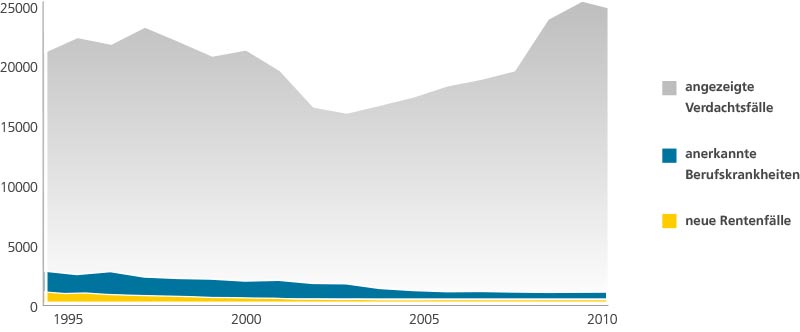
On the one hand, companies and employees are becoming increasingly sensitive to skin diseases caused by the use of lubricants. This is how the rising curve of suspected cases since 2007 can be interpreted. On the other hand, lubricants have apparently become safer and occupational safety measures have become more sophisticated. This is reflected in the declining incidence of occupational diseases caused by the use of cutting fluids.
Therefore, it is worthwhile to optimise work processes according to the T-O-P model, in order to protect employees and prevent absences, including incapacity for work.