 Objectives
Our targets in accordance with the Science Based Targets initiative (SBTi)
Our commitment to sustainability is underpinned by transparency and measurability. One key step in this direction comes in the form of our targets for reducing greenhouse gas emissions, which have been confirmed by the SBTi.
Summary of objective: in the short term, 1.5°C by 2030
This objective was approved as part of a simplified target-validation procedure that is only applicable to small and medium-sized enterprises (SMEs). Rhenus Lub GmbH & Co KG is committed to reducing scope 1 and 2 greenhouse gas emissions by 50% by 2030 – relative to the base year 2018 – and to measuring and reducing its scope 3 emissions.
 Initiative
About the Science Based Targets initiative
The Science Based Targets initiative (SBTi) is a collaboration between the Carbon Disclosure Project (CDP), the United Nations Global Compact (UN Global Compact), the World Resources Institute (WRI) and the World Wide Fund for Nature (WWF) and constitutes one of the commitments of the We Mean Business Coalition. The initiative advocates the establishment of scientifically sound objectives in order to bolster the competitive advantage of companies during the transition to a low-carbon economy.
Science-based targets are greenhouse gas emission reduction targets that align with the degree of decarbonisation required to meet the goals of the Paris Agreement – to limit global warming to well below 2°C above pre-industrial levels and pursue efforts to limit warming to 1.5°C
 CDP
CDP
CDP: Turning data into earth-positive impact
CDP is a non-profit organisation that operates the global disclosure system for investors, companies, cities, states and regions to manage their environmental impact. The global economy regards CDP as the gold standard for environmental reporting, with the most comprehensive and extensive data set on the actions of companies and cities.
As a medium-sized company, Rhenus Lub currently achieves a score of B in the CDP, which is within the Global Management Band. This is above the European average of C and corresponds to the average for the chemical sector of B.
Furthermore, we are proud to be in the CDP Supplier Engagement
Assessment Rating A having received, placing us in the Leadership category. This puts us significantly above the European average of B and the chemical industry average of B.

How are our company’s emissions calculated?
Sustainable production: corporate carbon footprint (CCF)
Sustainable products: product carbon footprint (PCF)
UN Global Compact: sustainable and fair
The Global Compact initiative of the United Nations aims to develop a sustainable and fair economy. As a long-standing member of the initiative, we are also committed to that objective. We act responsibly and stand up for human rights, labour standards, environmental protection and the fight against corruption. Of course, we see the UN’s Sustainable Development Goals as an integral part of these efforts.

 certified green electricity
100 per cent green electricity: double support for the energy transition
We’ve relied on green electricity for many years and will continue to follow this path. In fact, since 2019, we’ve used entirely “genuine,” certified green energy.
The power for our production processes and infrastructure is generated entirely from renewable energies. It is produced in an environmentally friendly and sustainable manner – and precisely when we need it. The electricity flows directly to us from the European grid without the use of complex storage equipment.
We’re therefore making a double contribution to the energy transition: by drawing electricity directly and through the price surcharge for green electricity, 75 per cent of which goes into new systems for renewable energies.
 green energy
Not all green electricity is the same
We rely on 100 per cent genuine green electricity derived from renewable energies. The generation process also relies entirely on pure green electricity – and green power is even used to produce the necessary components.
This makes a big difference. After all, electricity is only genuine green electricity if the entire process is sustainable and environmentally friendly – from production to disposal. It’s also vital that production and consumption take place simultaneously. Certainty in this regard is provided by certificates according to standards such as TÜV SÜD EE02 (CIVIS Standard EE+ with the criteria catalogue CMS Standard EE02).
 Recycling
Reusable and recyclable reconditioned drums for our world of tomorrow
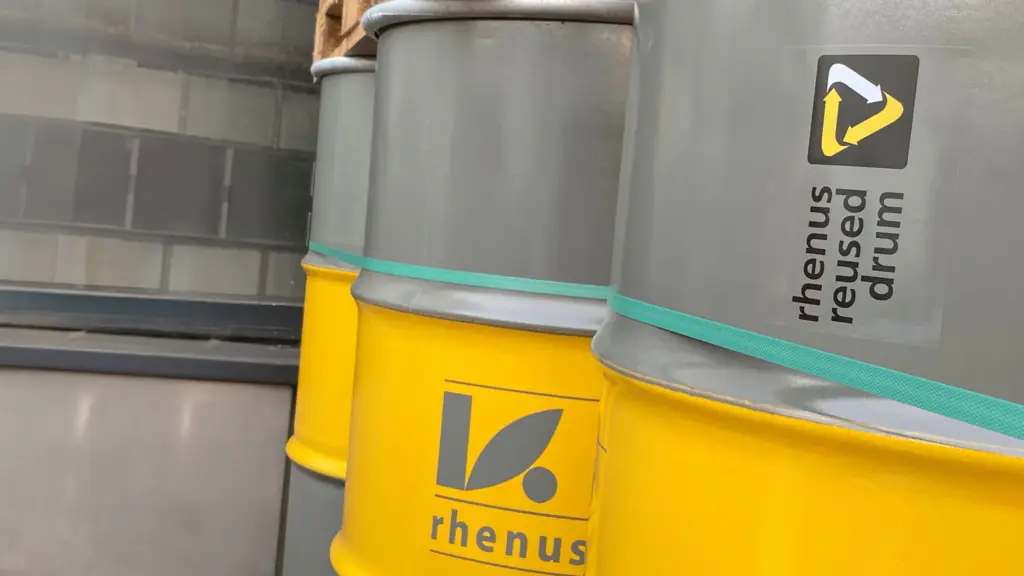
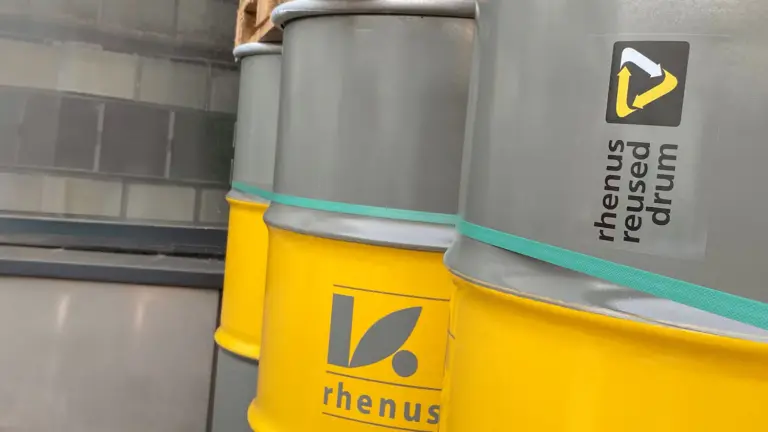
We fill many of our metalworking fluids in steel drums – and here we rely on reconditioned drums. These drums can not only be reused up to 10 times, but can also be recycled afterwards. This results in considerable savings in raw materials and an efficient contribution to the circular economy.
In addition, the use of reconditioned packaging reduces emissions of CO2 and other greenhouse gases by up to 80% compared to new packaging. In 2024, we were already able to save around 950,000 kg of CO2 by using over 48,000 reconditioned drums.