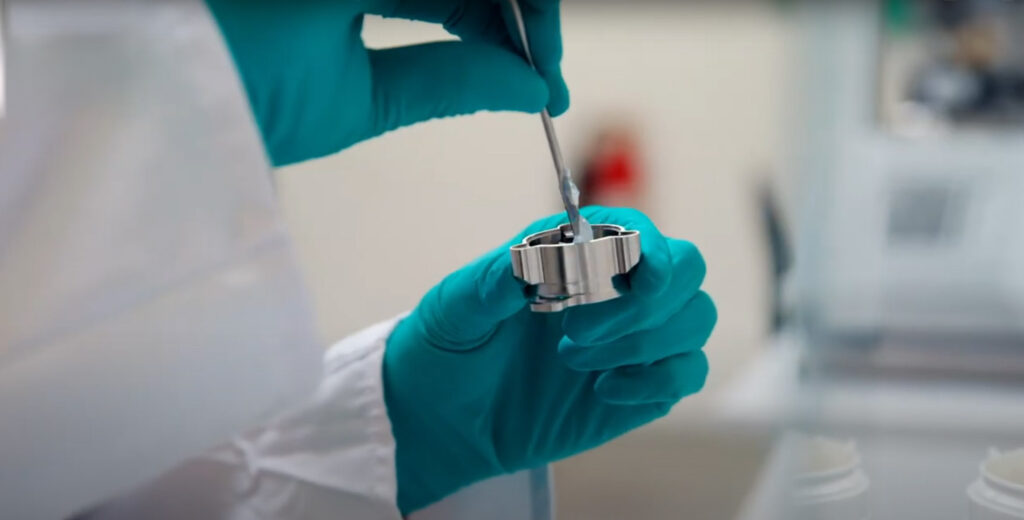
Coolant rhenus TS 421 delivers improved performance thanks to its extremely low foaming properties
Manufacturing processes in metalworking are increasingly characterised by high pressures. This also presents new challenges for developers of cooling lubricants. What is required are not only high-performance fluids, but above all low-foaming ones. After all, the more foam there is, the poorer the performance. With rhenus TS 421, the lubricant specialist Rhenus Lub has developed a cooling lubricant that produces virtually no foam, even at high pressures.
Improved cooling and lubricating effect
rhenus TS 421 can be used for the most common machining and grinding processes and is one of the products with the lowest foaming properties on the market. „This means users benefit from excellent cooling and lubricating properties even under high pressures,“ explains Daniele Kleinmann, Head of Product Management for Coolants and Lubricants at Rhenus Lub. „Thanks to the innovative formulation, the foam level is close to zero right from the start – an innovation not previously seen in comparable products.“ This opens up new possibilities for manufacturing companies. For example, even very soft tap water – often a trigger for excessive foaming – can be used without hesitation. Consequently, rhenus TS 421 offers manufacturing companies the best conditions for optimal machining and maximum process reliability, even under unfavourable water hardness conditions.
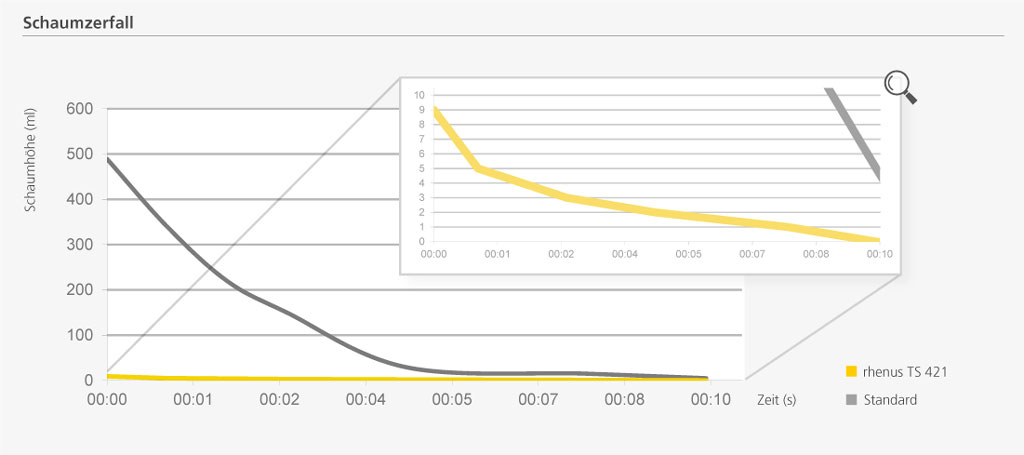
With the water-miscible cooling lubricant rhenus TS 421, foaming is a thing of the past
(Source: Rhenus Lub)
Good to know: Despite its impressive resilience, rhenus TS 421 contains absolutely no critical components such as secondary amines – ensuring worry-free machining in every respect.
Resilient and economical
Modern manufacturing also means cost-effective manufacturing. rhenus TS 421 therefore combines everything required for cost-optimised production. In addition to steel and cast iron, it can be used to machine all common aluminium alloys. Overall, the excellent flushing performance improves workpiece output and keeps tools and machines clean. Thanks to the particularly stable, specially formulated composition, not only is maintenance significantly reduced, but the manufacturing process is also made safer. In this way, users can actively keep their costs under control and have even been shown to reduce them.